A label-first breakdown of every listed ingredient, what independent research says, and where the evidence is still uncertain.
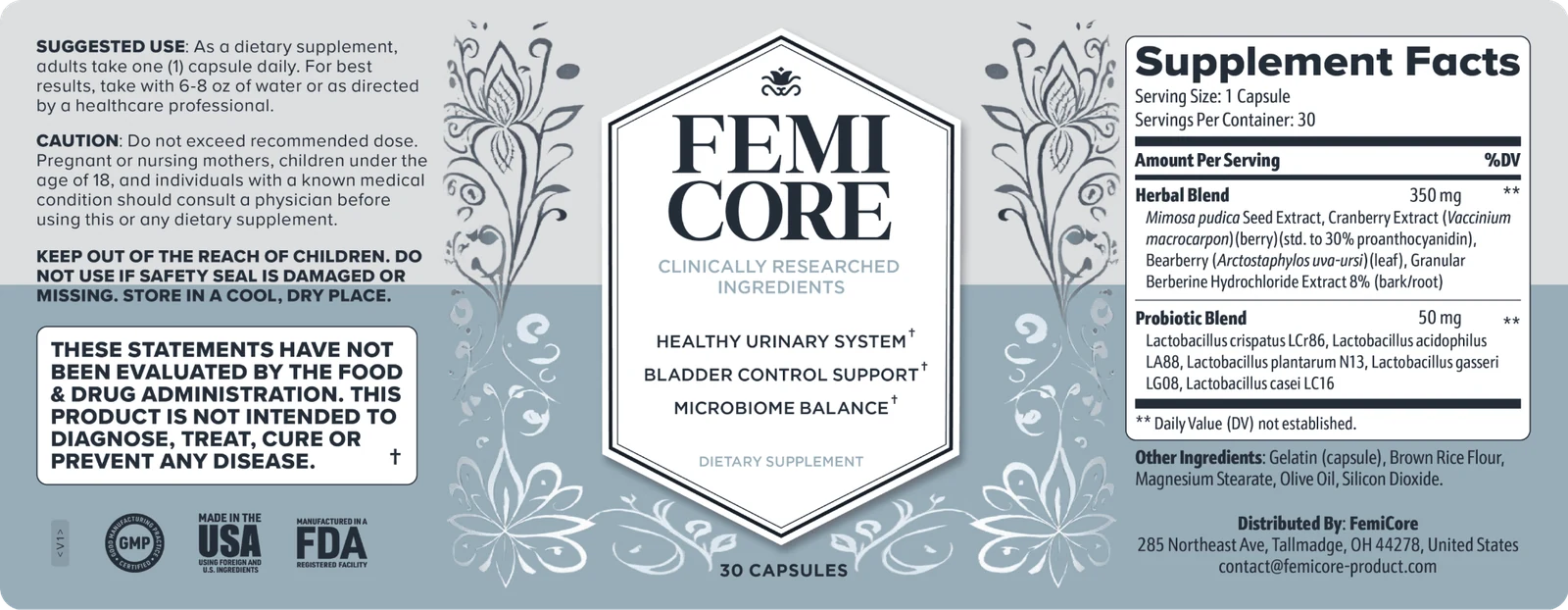
The label groups ingredients into a 350 mg herbal blend and a 50 mg probiotic blend. Because these are proprietary blends, the label does not disclose the individual amount of each ingredient inside the blend.
| Blend | Label amount | Ingredients |
|---|---|---|
| Herbal blend | 350 mg | Mimosa pudica seed extract; cranberry extract (Vaccinium macrocarpon berry, standardized to 30% proanthocyanidin); bearberry (Arctostaphylos uva-ursi) leaf; granular berberine hydrochloride extract 8% (bark/root) |
| Probiotic blend | 50 mg | Lactobacillus crispatus LCr86; L. acidophilus LA88; L. plantarum N13; L. gasseri LG08; L. casei LC16 |
Cranberry is one of the better-studied ingredients in the urinary-health category. A 2023 Cochrane review found that cranberry products reduced the risk of symptomatic, culture-verified urinary tract infections in some susceptible groups, including women with recurrent UTIs. That review assessed cranberry products broadly; it does not establish the effectiveness of FemiCore.
Bearberry (uva-ursi) has a history of traditional urinary use, but safety and duration of use matter. Berberine is pharmacologically active and has documented interaction potential with drug-metabolizing enzymes and transporters. Anyone taking prescription medication should discuss berberine-containing supplements with a qualified clinician or pharmacist.
The blend lists L. crispatus, L. acidophilus, L. plantarum, L. gasseri and L. casei. These species appear widely in probiotic research. Urogenital-microbiome literature often highlights Lactobacillus-dominant communities, especially L. crispatus, but effects are strain- and dose-specific. Research on one strain should not be generalized automatically to another.
Mimosa pudica is a botanical with a broad traditional-use literature and published reviews of its phytochemistry. The strongest direct urinary or bladder evidence for Mimosa pudica is much less developed than the evidence base for cranberry, so we treat its role in FemiCore cautiously.
Ingredient research is not the same as a clinical trial of the finished FemiCore product. We cite ingredient and microbiome research for context and identify seller-reported information separately.
Check today's package pricing, shipping terms, bonuses and checkout conditions—or watch the current seller video presentation first.