What the L. casei group is, how it is studied and why advertising claims should be matched to product-specific evidence.
What the L. casei group is, how it is studied and why advertising claims should be matched to product-specific evidence.
This article discusses Lactobacillus casei in context. It does not claim that research on an ingredient, species or health topic proves the finished FemiCore product works.
The L. casei group has been widely researched and reclassified over time. Clinical outcomes are strain- and product-specific.
The L. casei group has been widely researched and reclassified over time. That distinction matters when comparing a commercial supplement with scientific literature.
Clinical outcomes are strain- and product-specific. The most reliable interpretation is to match the exact ingredient, strain, dose, population and outcome studied.
Systematic reviews have cautioned against overgeneralizing advertising claims from limited studies. That distinction matters when comparing a commercial supplement with scientific literature.
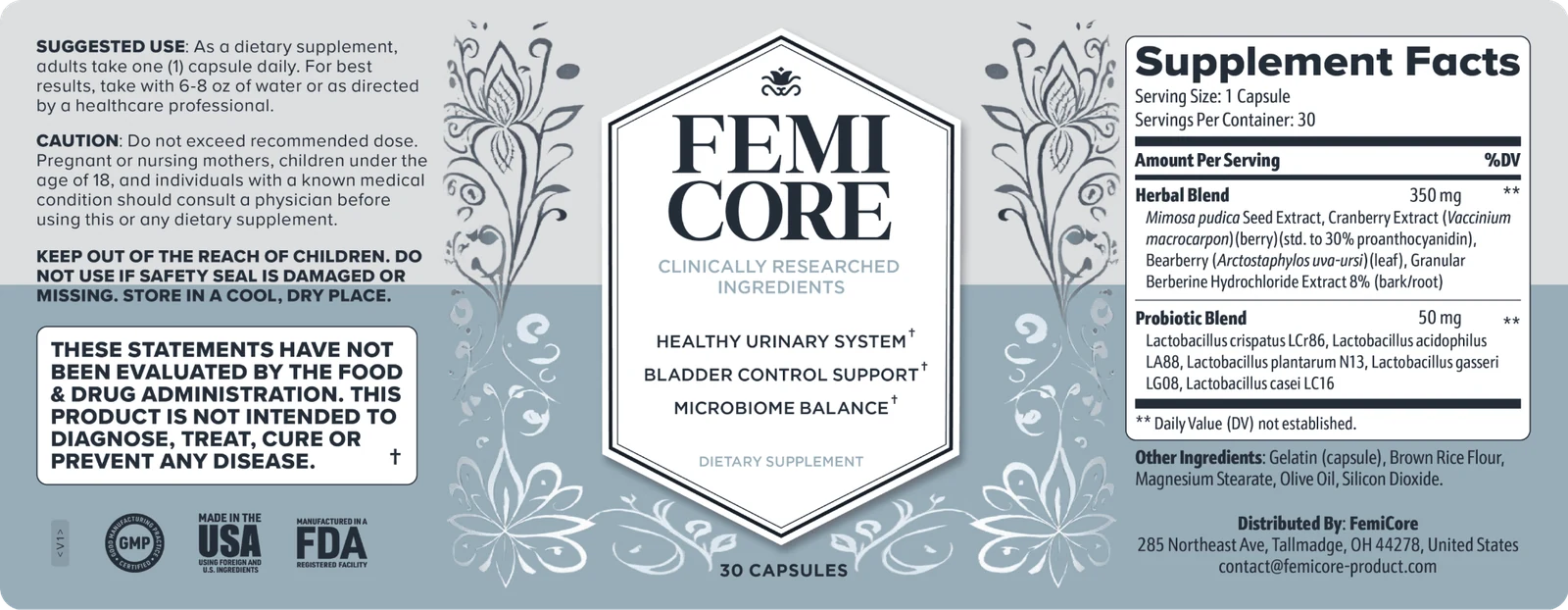
FemiCore lists LC16 within a proprietary probiotic blend. The most reliable interpretation is to match the exact ingredient, strain, dose, population and outcome studied.
FemiCore is relevant to this topic because its current label includes ingredients or positioning connected with Lactobacillus casei. The label remains the best source for what is actually inside the product. When an individual amount is hidden inside a proprietary blend, we avoid pretending that a published study dose is the same as the product dose.
For broader product context, see Femicore Ingredients, How Femicore Works.
Health and microbiome research can be useful without being definitive. Association studies can identify patterns but do not prove that changing one microbe or taking one ingredient will produce a specific outcome. Randomized trials provide stronger evidence for an intervention, but even those results apply most directly to the exact formulation, dose and population studied.
For any supplement, persistent urinary symptoms, pain, fever, blood in the urine, medication interactions or pregnancy-related questions should be discussed with a qualified healthcare professional rather than managed only through online product research.
Ingredient research is not the same as a clinical trial of the finished FemiCore product. We cite ingredient and microbiome research for context and identify seller-reported information separately.